Digital Marketing Course with Live Projects: Learn Practical Skills for a Successful Career
Choosing the right Digital Marketing Course is an important step for students, fresh graduates, and working professionals who want to build a career in online marketing. Today, businesses use digital platforms to promote their products, connect with customers, and increase sales. Because of this growing demand, learning digital marketing with practical experience can help learners understand how online marketing works in real business situations.
At Digital Wiings, students can explore different areas of digital marketing and understand how marketing strategies are planned and implemented. Learning through practical activities and live project exposure helps students connect theoretical concepts with actual marketing tasks.
Why Choose a Digital Marketing Course with Practical Learning?
Digital marketing is not limited to understanding definitions or reading about marketing strategies. It involves working with different platforms, analysing performance, creating content, and understanding customer behaviour.
A course that includes practical learning allows students to understand how these activities are performed.
For example, instead of only learning about search engine optimisation, students can understand how keyword research is conducted, how website content is optimised, and how search engine performance is evaluated.
Practical learning can help students:
- Understand real digital marketing activities.
- Gain experience with marketing tools and platforms.
- Improve analytical and problem-solving skills.
- Learn how online advertising campaigns work.
- Develop confidence in handling marketing tasks.
What Does a Digital Marketing Course Teach Beginners?
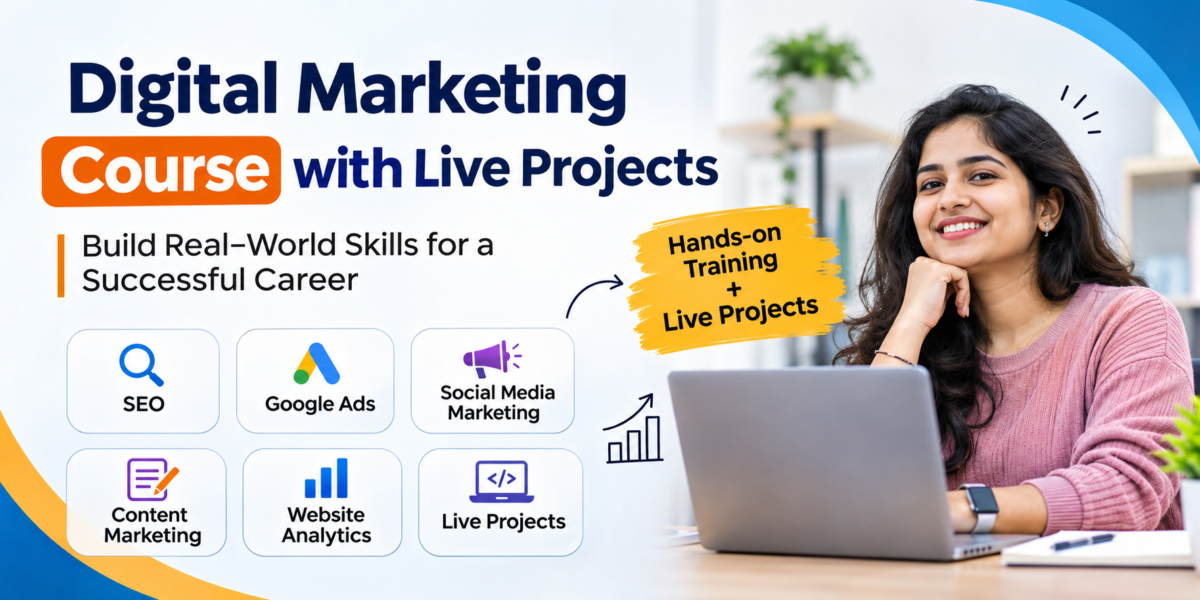
A complete digital marketing learning programme introduces students to several important marketing concepts. Each module focuses on a different part of online promotion.
1. Search Engine Optimisation (SEO)
SEO helps websites improve their visibility in search engine results. Students learn how search engines understand website content and how businesses can attract organic visitors.
Important topics include:
- Keyword research and keyword selection.
- On-page SEO optimisation.
- Off-page SEO techniques.
- Technical SEO fundamentals.
- Website content optimisation.
- SEO performance analysis.
2. Google Ads and Paid Advertising
Google Ads helps businesses reach potential customers through paid advertisements. Students can learn the basics of creating advertising campaigns and understanding how paid promotions work.
The learning process includes keyword targeting, campaign structure, advertisement creation, budget planning, and performance tracking.
3. Social Media Marketing
Social media platforms have become important channels for business promotion. Students learn how brands communicate with their audiences through different social media platforms.
Topics include content planning, post creation, audience targeting, social media advertising, engagement strategies, and performance measurement.
4. Content Marketing
Content marketing focuses on creating useful information that attracts and engages potential customers.
Students understand how to prepare blog posts, website content, social media captions, and promotional content based on audience interests and business goals.
5. Website Analytics
Understanding website performance is an important digital marketing skill. Students learn how to evaluate website traffic, user behaviour, traffic sources, and campaign performance using analytics tools.
These insights help marketers understand which strategies are performing well and where improvements are required.
How Live Projects Help Students Gain Practical Experience
One of the important aspects of learning digital marketing is understanding how different marketing activities work together.
Live projects or practical project exercises give students opportunities to apply the concepts they learn during training.
For example, a practical SEO project may involve selecting a website, identifying relevant keywords, analysing competitors, improving website content, and reviewing optimisation opportunities.
Similarly, a social media project may involve preparing a content calendar, creating promotional posts, selecting target audiences, and evaluating engagement.
Through these activities, learners can understand the relationship between marketing decisions and business results.
Practical project work can also help students prepare examples of their work for interviews and future career opportunities.
Essential Digital Marketing Tools Students Should Know
Digital marketing professionals use different tools to research, plan, execute, and measure marketing activities.
Some commonly used tools include:
- Google Analytics – Understanding website traffic and user behaviour.
- Google Search Console – Monitoring website search performance.
- Google Ads – Managing paid advertising campaigns.
- Google Keyword Planner – Researching keyword ideas.
- Canva – Creating marketing graphics and social media designs.
- SEMrush – Analysing keywords and SEO opportunities.
- Meta Business Suite – Managing Facebook and Instagram marketing activities.
Learning how these tools work can help students understand the practical side of digital marketing.
Who Can Learn Digital Marketing?
Digital marketing is a skill-based field that welcomes learners from different educational and professional backgrounds.
The course can be useful for:
Students: Students interested in marketing, business, communication, or technology can explore digital marketing as a career option.
Fresh Graduates: Graduates can develop industry-relevant skills and prepare for entry-level digital marketing roles.
Working Professionals: Professionals looking to develop additional skills or explore a career change can learn digital marketing concepts.
Business Owners: Entrepreneurs can understand how to promote their products and services through online platforms.
Freelancers: Individuals interested in providing SEO, social media, or advertising services can explore digital marketing opportunities.
Career Opportunities After Learning Digital Marketing
Digital marketing offers different career paths depending on a person’s interests, skills, and practical experience.
Some possible job roles include:
- SEO Executive
- Digital Marketing Executive
- Social Media Executive
- Google Ads Specialist
- Content Marketing Executive
- PPC Executive
- Digital Marketing Analyst
Students can gradually develop their expertise by working on practical assignments, understanding marketing tools, and building a portfolio of their work.
Career opportunities may vary depending on individual skills, experience, and employer requirements.
Why Learn Digital Marketing at Digital Wiings?
Choosing a learning institute is an important decision when starting a new career path. Students should look for a programme that explains concepts clearly and provides opportunities to understand practical marketing activities.
Digital Wiings focuses on helping learners understand different areas of digital marketing, including SEO, Google Ads, social media marketing, content marketing, and website analytics.
Students can explore how these marketing channels work individually and how they contribute to an overall business marketing strategy.
Before joining, learners can discuss the syllabus, practical activities, course duration, and available career guidance to understand whether the programme matches their learning goals.
To know more about the available programme, visit the Explore our training programme
Conclusion
Digital marketing is a constantly evolving field that combines creativity, technology, research, and business strategy. Learning its fundamentals along with practical activities can help students understand the skills required for different marketing roles.
Whether you are a student, fresher, working professional, or business owner, developing digital marketing knowledge can open opportunities to explore the online marketing industry.
At Digital Wiings, learners can take their first step towards understanding digital marketing concepts and developing practical skills for their future careers.
Frequently Asked Questions
1. Is digital marketing suitable for beginners?
Yes. Beginners can start learning digital marketing without prior industry experience. Understanding the fundamentals and practising regularly can help them develop the required skills.
2. Does digital marketing require coding knowledge?
Basic digital marketing activities generally do not require coding knowledge. However, understanding basic website concepts can be helpful.
3. What are the important skills required for digital marketing?
SEO, content creation, social media management, online advertising, analytical thinking, communication, and creativity are useful digital marketing skills.
4. Can freshers apply for digital marketing jobs?
Yes. Freshers can apply for entry-level roles such as SEO Executive, Digital Marketing Executive, and Social Media Executive, depending on their skills and job requirements.
5. Why are practical projects important in digital marketing?
Practical projects help learners understand how marketing concepts are applied, how tools are used, and how campaign performance is evaluated.